
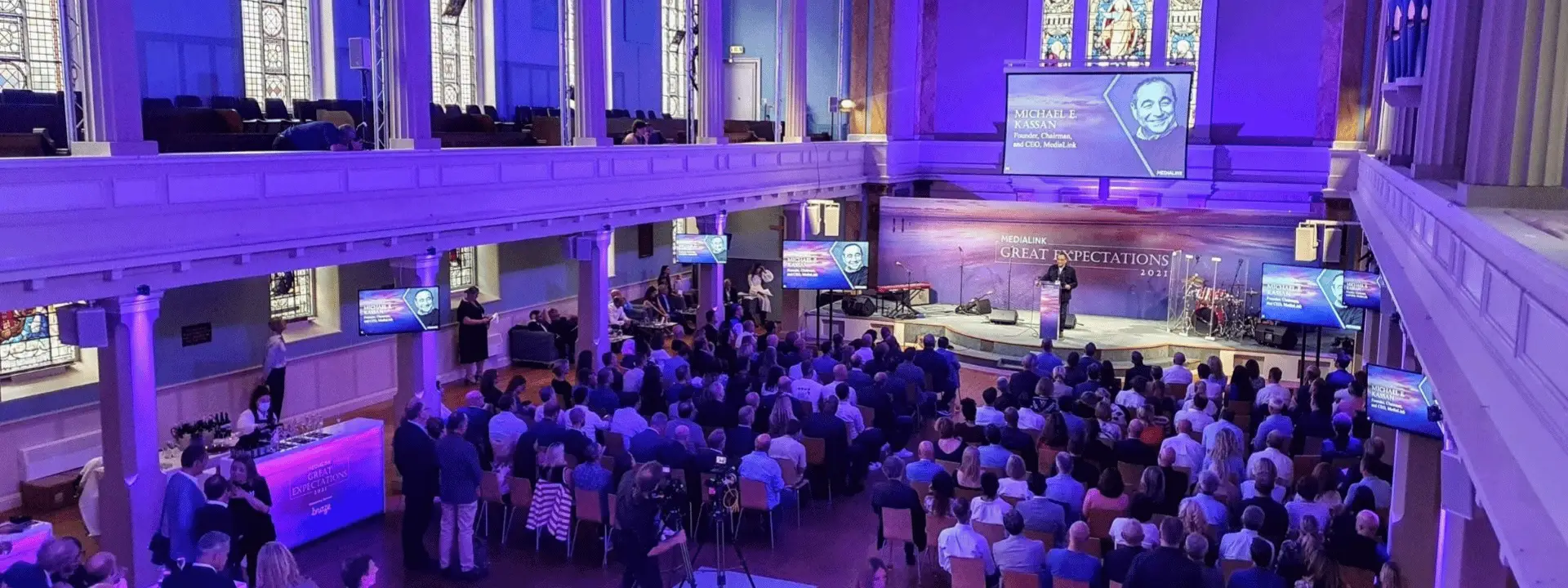
If you are thinking about hiring out your church premises, it is tempting to start with the obvious things. How much should we charge? Where should we advertise? Do we need a booking system? Should we put the church hall on a venue directory?
Those questions matter. But they aren’t where I would start. Before you advertise anything, you need to work out what kind of venue hire could actually work for your church. Because there is a big difference between having a building that can be hired and developing venue hire that generates useful income without becoming an enormous burden on the people running it.
In my experience, getting that right comes down to four things: Potential, Parameters, Process and Presence.
1. Potential: work out what could actually work
One of the hardest things about starting venue hire is simply knowing what to do. There are so many possibilities. Children’s parties. Meetings. Classes. Concerts. Rehearsals. Weddings. Corporate events. Nurseries. Community groups. Filming. Regular hires.
But just because you could hire your church for something doesn’t necessarily mean you should. I would start by looking at the building itself and the market around it. What facilities do you have? What is your capacity? Is there parking? How good are the public transport connections? What happens in the surrounding area? Who is already looking for space there? What other venues are available and what are they charging?
Then there are the less obvious questions. Who is going to manage the bookings? Who can show people around? Who opens and closes the building? What happens if you have three events in a week rather than one? Do you have the skills internally to run this well?
And, importantly, what does it actually cost you to hire out the building? This is something I see churches underestimate or forget to calculate. There can be an assumption that any additional income is good income. If the building would otherwise be sitting empty, £100 coming in must be better than nothing.
Not necessarily.
There is heating, electricity, cleaning, administration and wear and tear. There may be staffing costs. There will certainly be time involved. You need to know what an event costs you before you can decide what you need to charge and whether a particular type of booking is worth pursuing.
The aim isn’t simply to find a use for your space. It is to identify the opportunities where your building, local demand and organisational capacity meet. I’ve written more about how to choose the right income streams for your church if you’re still working through those questions.
If you’re not sure how to assess that, a Strategic Venue Audit can give you an independent view of your building’s potential, the market around you and what would be realistic for your team.
2. Parameters: decide what you need to protect
Before deciding who you want to hire your building to, I would ask a different question: What matters to us?
This is where venue hire becomes very specific to the individual church. Perhaps Saturday evenings need to remain free because you want the building ready for Sunday morning. Perhaps Wednesday is your community day, but actually there is no particular reason it couldn’t happen on Tuesday.
Some things are flexible. Others aren’t. Work out which is which.
Think about your calendar, worship, congregation, neighbours, staff and volunteers. Think about what you need to protect for venue hire to remain sustainable rather than gradually taking over the building. I’ve written separately about how to balance worship and hire use in a church if this is something you’re trying to work through.
Your values matter here too. A church might decide to remain alcohol-free because of the people it serves. There may be activities it doesn’t consider appropriate within a consecrated space. These aren’t awkward complications to deal with once an enquiry arrives. They are useful parameters that should shape your venue hire model from the beginning.
The same applies operationally. If you can’t reliably offer the same hours every weekday, pursuing a nursery probably doesn’t make much sense. If you want control over your diary and aren’t comfortable committing to bookings a year ahead, weddings may be difficult. If you don’t have the staffing capacity for complicated builds and breakdowns, large events might create far more work than they are worth.
Different customers book in different ways. Your parameters begin to tell you which of those customers are likely to work for you. That is much more useful than deciding that you want to hire to “the local community” and waiting to see what turns up.
3. Process: make venue hire manageable
Once you know what you are offering, you need a way of actually running it. I tend to think about the operational side as a journey.
Someone discovers your venue. They make an enquiry. Someone responds. Perhaps they visit. They decide to book. You take payment, gather the information you need, prepare for the event, give them access, manage anything that happens on the day and follow up afterwards.
Walk through that journey from beginning to end. Then ask what needs to exist at every stage.
That will include fairly mundane things such as:
- who is responsible for enquiries
- how enquiries and bookings are recorded
- when and by whom venue tours can be offered
- contracts and terms and conditions
- deposits, payment and cancellation arrangements
- insurance and risk assessments
- fire safety and emergency procedures
- safeguarding requirements where relevant
- supplier documentation, including insurance and food hygiene information
- first aid and accident reporting
- keys, security and building access
- cleaning and waste
- setup and pack-down arrangements
- staffing and cover for future bookings
None of this needs to become enormously bureaucratic. But it does need to be thought through. I’ve covered some of these practicalities in more detail in Figuring Out Venue Hire? What I Wish You Knew.
One of the biggest problems I see is venue hire living inside one person’s head. They know that Mrs Smith needs the side door opened at six, that the heating takes an hour to come on, that this particular group needs six tables, that the caterer hasn’t sent their insurance certificate yet and that someone needs to move the chairs back before Sunday.
That might work with a handful of bookings. It becomes very fragile as venue hire grows.
At Christ Church Roxeth, we built the booking process into ChurchSuite, with a workflow and checklist covering the different stages of a booking. That sounds like a fairly small operational change. In practice, it meant the administrator no longer had to remember dozens of individual tasks for every event. Other members of the team were also trained to conduct site visits and manage parts of the process.
Venue hire stopped depending so heavily on one person knowing everything. That matters if you want it to grow without exhausting the person responsible for it.
4. Presence: make it easy for people to choose you
Then, finally, we get to marketing. And what that looks like depends entirely on who you are trying to reach.
If you have a community hall primarily suited to children’s parties and local groups, your best marketing might be incredibly local. Posters. Leaflets. Community Facebook groups. Local events. Signage outside the building.
If you have a significant historic church in central London and want to attract corporate receptions, filming or concerts, you are probably looking at a much more digital approach. There isn’t one correct marketing channel for church venue hire.
There is, however, one thing I think almost every church needs: a decent online presence.
I still regularly come across church websites where venue hire amounts to a sentence on the contact page: “Our spaces are available for hire. Please contact the church administrator for more information.”
The problem is that you’re asking the customer to do all the work. They don’t know what the room looks like. They don’t know what it costs. They don’t know whether their event will fit. They don’t know what facilities are included. They don’t know whether you regularly host events like theirs.
And they probably have another 20 tabs open with other venues that are making those questions much easier to answer.
Christ Church Roxeth is a good example of what can happen when you change this. Previously, venue hire was essentially a link from the contact page to an enquiry form.
We developed a proper venue hire presence that showed what the church could offer, how the spaces could work for different customers and how to enquire. But we also worked on what sat behind it: the systems, customer journey, resources and team training.
Within the first three months, bookings increased by 60%. Hire income more than tripled in the first quarter alone, and within a few months the church had already generated more additional income than it had invested in the work.
The website helped, but it wasn’t the whole answer. The presence brought people in. The process made it possible to deal with what happened when they arrived.
But won’t hiring out our church create more work?
Yes. I think it is important to say that plainly.
If you use your building more, there will be more administration. Things will get dirty more quickly. Equipment will eventually get damaged. Carpets will wear. There will be awkward customers. Something will, at some point, not go according to plan. Good systems reduce those problems. They don’t make them disappear.
I saw this first-hand when I was running venue hire at St Mary’s London. As the number of events grew, so did what was required to run them. When I first started developing venue hire, I was working on it for around two and a half days a week. By the time I left, we had a team of three.
We also reached a point where the increased use of the building meant we needed additional caretaking capacity. That could sound like an argument against venue hire. It wasn’t.
We could employ those people because the venue hire could sustain them, while continuing to generate income beyond the cost of running it.
Generating constant income changed what was possible elsewhere. There was money to invest back into the building. Work that had been wanted for years, including significant stonework, became possible. By the time I left, the building was arguably in better condition, because it was being used more there were finally resources available to look after it properly.
The income also funded activity beyond the building itself, including community and charitable initiatives such as Love Marylebone. That is the part of this conversation I think churches can miss.
Income creates choices.
It can pay additional support for the administrator who is already stretched. It can pay for somebody to look after the building. It can buy much-needed repairs. It can subsidise community use. It can fund ministry that doesn’t generate income itself.
Running venue hire has a cost, but so does having an underused building that becomes progressively more expensive to maintain without a corresponding source of income. If you’re thinking more broadly about the role income can play in resourcing mission, I’ve explored that in How Can Churches Generate More Income Without Relying Only on Giving?.
Start with the model, not the marketing
The truth is there will probably be a slightly painful stage at the beginning. You will discover things you hadn’t thought about. A process won’t quite work. Someone will ask a question your terms don’t answer. You will realise that a particular type of booking is much more trouble than you expected.
That is normal. The answer isn’t to try to remove every possible risk before you begin. It is to start thoughtfully, learn from what happens and build something that becomes stronger with use.
Because the goal isn’t to hire your church building out as much as possible. It is to develop a model of venue hire that your building, your people and your church can sustain.
Get clear on the Potential. Set your Parameters. Build the Process. Then develop the Presence that puts the right offer in front of the right people.
If you’re reading this thinking that there is rather a lot to get right, there is. You can absolutely build it yourself, but you don’t have to work every part of it out from scratch. I’ve developed venue hire packages for churches that want help putting these foundations in place, from understanding the opportunity and setting the strategy through to the marketing, systems and training needed to actually run it. The aim is to make the process more manageable, reduce some of the avoidable risk and leave you with something your team can confidently carry forward.
For many churches, staying exactly where they are isn’t the risk-free option it appears to be. Buildings still need maintaining. Costs still rise. Staff and volunteers still have finite capacity.
Done thoughtfully, hiring out your church premises can be one of the ways the building begins to contribute towards its own future, and towards everything else you want it to make possible.