
The Pricing Landscape
One thing I keep coming back to lately is how often churches assume that lower pricing will make it easier for them to offer venue hire.
I completely understand why, because I think many churches have a real desire to be accessible and community-minded, and often a discomfort with charging properly for spaces that are ultimately there to serve people. Alongside this, there is often a sense of increased responsibility that comes with higher pricing, and whilst higher pricing often means providing a better experience, in my experience, the expectations of more budget clients can still be disproportionately high!
So, after years of working with churches and heritage venues, I’m not actually convinced lower pricing creates the outcome people hope it will.
The Risk Of Only Offering Cheap Rates
Interestingly, some of the most operationally draining bookings are often the lower value ones. They tend to involve:
- More negotiation around pricing as budgets are tight.
- More hand-holding because the clients lack experience.
- Increased pressure on teams to flex and accommodate requests because ‘you are a church, so you should help’.
- More cleanup and damage to the building, where events are run by amateurs who haven’t invested time in proper planning.
Put this all together in a scenario where venue hire is being run by volunteers or a single team member who is already juggling fifteen other things, and it can create a huge amount of strain across the life of the building for relatively small financial return and sadly it isn't uncommon for me to come across churches who's rates mean they are practically subsidising some of the events they host.
Looking Outside The World Of ‘Church Hire’
I think one of the things the wider venue industry understands much better than many churches is that pricing isn't just about how much income you make; it is also about the type of client you attract, because how you price shapes their expectations. It effects:
- How clients perceive the venue before they’ve even visited
- How people communicate
- How quickly they make decisions
- How much structure they expect
- How much they value the space itself!
And honestly, I think many churches accidentally position themselves as ‘cheap hall hire’ while sitting on spaces that actually offer so much more.
Your True Value
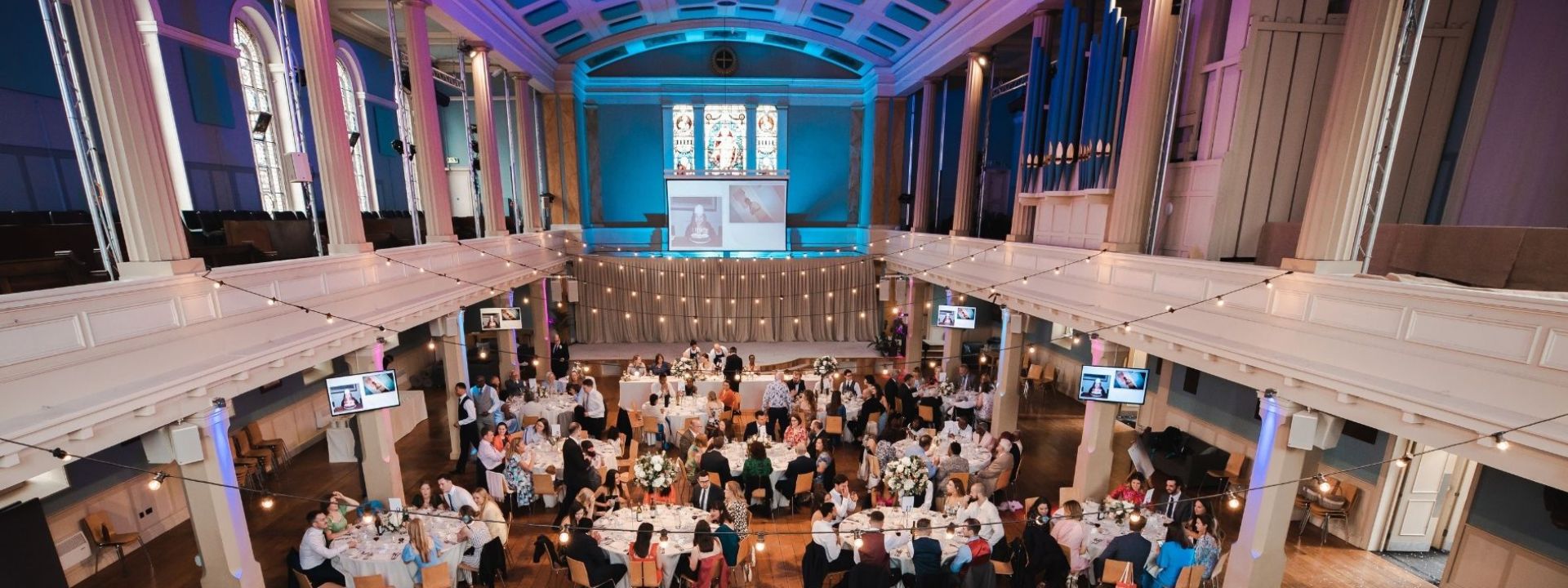
I spend huge amounts of time researching churches, heritage venues, and commercial event spaces, and sometimes the contrast is fascinating. You’ll have churches with really useful functional spaces, beautiful architecture, incredible atmosphere, central locations, history, and character (something most modern venues would struggle to recreate!), and yet how their venue hire offering is presented feels almost apologetic.
| Common Church Limitations | Professional Venue Standards |
|---|---|
| Hidden or complicated pricing | Transparent, structured rates |
| Old or amateur photography | High-quality visual marketing |
| Slow enquiry processes | Responsive, professional systems |
Professional venues are often not just selling a space; they are selling confidence that the event will be handled well. That has a huge impact on the calibre of clients who enquire in the first place.
I think many churches miss that clients directly project the quality of your resources (e.g. brochures, photography) and interactions onto the experience they expect. It is why great marketing isn't just something that looks good, but something that exudes competence, all of which creates confidence, which in turn creates bookings.
What Actually Creates Healthier Growth
What’s been interesting for me over the years is seeing how often healthier income growth actually comes through creating healthier operational structures:
- Better Positioning: Aligning the venue with the right kind of bookings.
- Better Systems: Streamlining the enquiry and management process (If you're not sure where to start with this, my quick-read guide More Than a Building covers all the basics).
- Better Responsiveness: Building trust through professional communication.
I think churches sometimes assume growth means filling every available date in the calendar, but often the venues that end up healthiest long term are the ones that become more intentional about the kinds of events they want to host and the operational model required to sustain them well
The Bigger Picture
Ultimately, the goal isn’t just income. It’s creating something that supports the long-term life of the church, protects the team, strengthens the building’s sustainability, and allows the space to continue serving people well for years to come. And I think part of that starts with churches recognising the value of what they already hold.