
One mistake we can make when trying to improve church venue hire is assuming that becoming more professional means becoming more complicated.
A parish hall hiring for a few hundred pounds and a historic city church hosting corporate events worth several thousand pounds both need to be run well. But what well looks like for those two spaces is completely different.
The aim isn’t to build the most sophisticated venue operation you possibly can. It’s to build the right one for the opportunity in front of you.
Start with what you’re actually selling
If you’re running a local hall primarily used for children’s parties, classes and community groups, your customers are probably looking for something straightforward. Is it nearby? Is it affordable? Does it have the facilities they need? Is it easy to enquire and book?
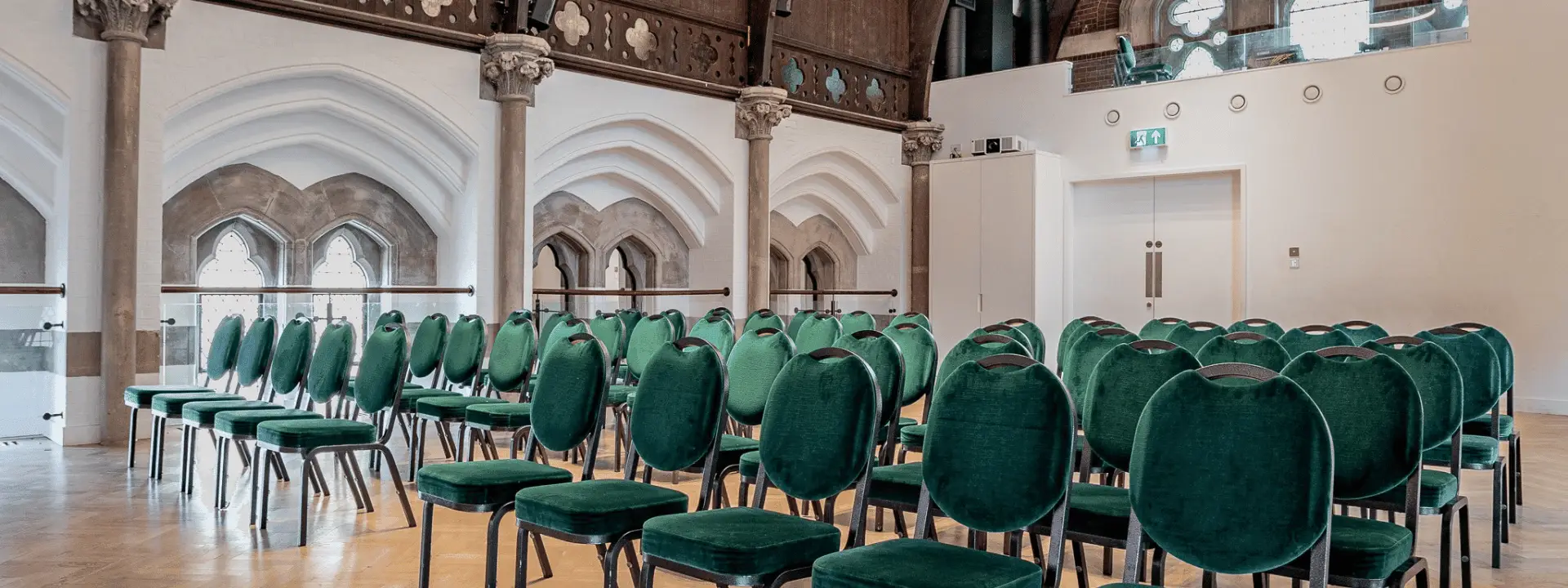
A large city church pursuing corporate receptions, dinners or major events is selling something different. A customer spending £5,000 or £10,000 needs stronger reassurance about quality, service and logistics. Photography and positioning matter more. Site visits, supplier relationships and the customer journey become a much bigger part of winning and managing the booking.
Neither model is better. They’re responding to different customers and different opportunities. That’s why I think working out which opportunities actually suit your church has to come before deciding what to invest in.
The numbers should shape the model
When I look at a building, I assess the space, the market and what I think it could realistically achieve. I then test that through the commercial pricing model we use, which gives me a much firmer basis for understanding potential pricing and return.
That matters because the economics can be completely different. If I’m recommending £10,000 of work to a venue where individual bookings could be worth several thousand pounds, the investment might represent only two or three additional bookings. If £10,000 represents a fifth of everything I think a small hall could realistically generate in a year, I wouldn’t recommend the same approach.
The smaller venue still needs to be presented well. It still needs good information, strong photography and an easy customer journey. It just doesn’t necessarily need everything built from scratch.
That’s actually why we created our Design Kits. We wanted churches with more modest commercial potential to access the same thinking behind our bespoke work, but in a ready-made format that could be personalised to their space without the same investment.
The same applies behind the scenes
A straightforward hall taking lower-value bookings doesn’t need an elaborate sales operation. It needs a reliable process, appropriate terms, good enquiry responses and systems that save an already-busy administrator time.
A venue handling events worth thousands has more at stake. Contracts, payment schedules, site visits, suppliers, and operational planning become more significant because the events are more complex and the return justifies the extra work.
Facilities need the same kind of thought. Not having a commercial kitchen, for example, may rule out some dinner formats, but it doesn’t necessarily rule out all-day conferences. Buffet lunches or externally prepared catering may work perfectly well. Understanding the limitation properly means you can build an offer around what the space can do rather than simply writing off an entire market.
The foundations of good venue hire are remarkably consistent. I’ve written more about those practical foundations here. What changes is how far you need to take each one.
It’s also why our venue hire packages aren’t simply different amounts of the same work. They’re designed around different levels of opportunity, complexity and likely return.
Good venue hire isn’t about doing everything. It’s about knowing what this particular building needs, what it can return, and investing accordingly.