
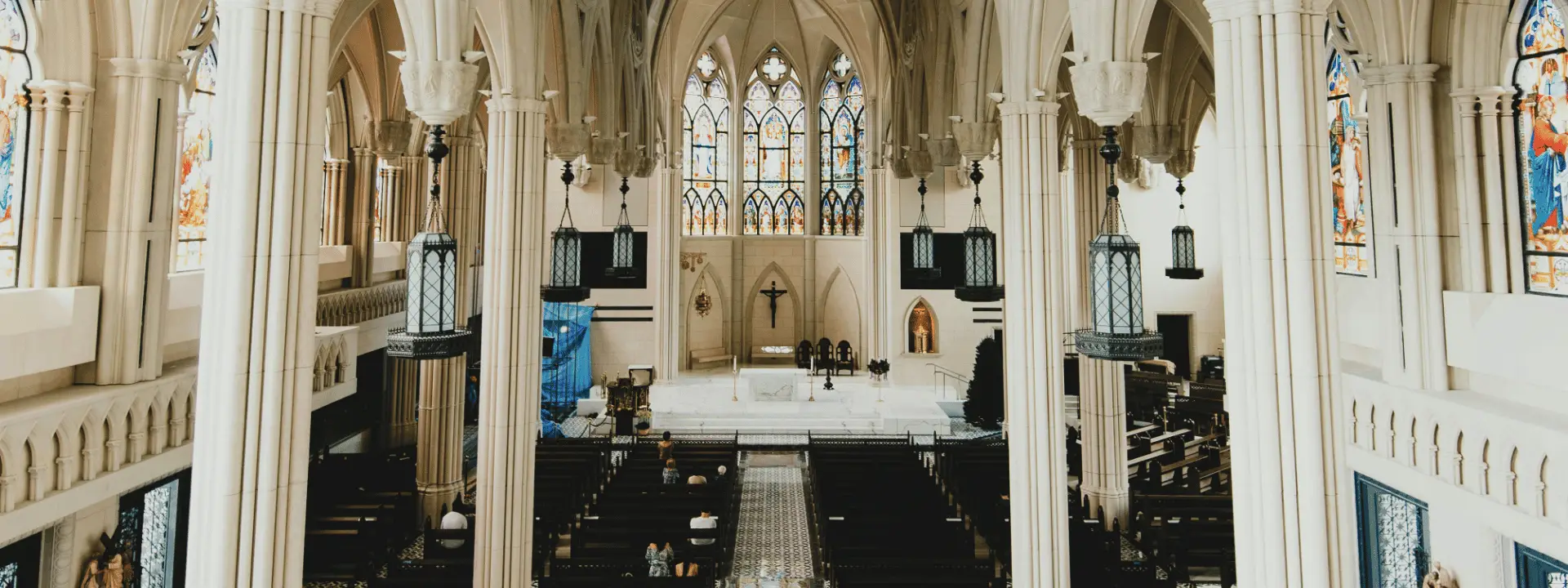
Church buildings are places where sacred things happen. They are where people are baptised, where marriage vows are made and where we gather to say our final goodbyes to people we’ve loved. They are places of worship and prayer, of stillness and encounter with God. I believe deeply in the value of setting aside spaces for those things, and in protecting their ability to fulfil that purpose.
But I also wonder whether, in our desire to protect the sacredness of our church buildings, we sometimes become so focused on protecting the building that we lose sight of the people it exists to serve.
It’s a question I’ve had to wrestle with myself.
Can a building contain God?
I grew up in a fairly conservative Christian family. My grandad was a Baptist minister, and every Sunday growing up I'd put on my hat and Sunday best! Church was treated with a really high degree of reverence.
So when I found myself running a commercial venue hire operation from a church, whether what I was doing was actually right mattered to me. I didn’t simply want a theological argument that let me keep doing something commercially successful. I wanted to know whether I believed in it. I’ve written much more about that wrestling in Exploring the Biblical Compatibility of Church Hire.
One passage I kept coming back to was Solomon’s dedication of the Temple. Here is this extraordinary building, constructed specifically for the worship of God, and Solomon acknowledges that “the heavens, even the highest heaven” cannot contain God, let alone the temple he has built.
I love that because throughout Scripture we find this tension. Places matter. The Temple mattered. Gathering matters. But God has never been containable. The earliest Christians largely gathered in people’s homes, and later Paul writes not about a building but about God’s people as his temple, with the Spirit of God dwelling among them.
None of that makes our church buildings meaningless. For me, it actually helps put them in their proper place.
Protect the purpose, not simply the building
I think there are things we absolutely should protect. If commercial activity means a church can no longer gather properly for worship, something has gone wrong. If prayer is constantly being displaced by bookings, something has gone wrong. If we’re accepting activities that fundamentally conflict with what we believe because somebody is prepared to pay us, something has gone wrong.
Venue hire should never become a church's purpose. But protecting the purpose of the building is different from protecting the building from external use.
Opening the doors will create wear and tear. People will occasionally behave in ways we wouldn’t. Furniture will get moved. Things will need cleaning. Allowing people we don’t know to use spaces we care deeply about carries risks.
But keeping the doors closed also carries risks.
And there are practical ways of protecting the worshipping life of a church without making meaningful hire impossible. I’ve explored those in How to Balance Worship and Hire Use in a Church.
Sometimes crossing the threshold is the hardest part
Running venue hire at St Mary’s changed how I thought about this because I watched what happened when people who wouldn’t ordinarily choose to enter a church suddenly had a reason to.
Some came for concerts. Some came for commercial events. Some worked for large companies that simply needed somewhere to gather. And sometimes they came back. People who had first encountered us through an event later came in for prayer or attended a service.
Others told me about difficult experiences of Christianity earlier in their lives, then encountered something different simply through being in our building. They met people who were kind. They saw the life of the church happening around them. The building stopped being quite so unfamiliar.
When someone is exploring church, sometimes the hardest part is simply getting through the door for the first time. Venue hire gave people a reason to cross that threshold without requiring anything from them spiritually, and once they had crossed it once, coming back didn’t feel quite so difficult.
I came to see that as part of our hospitality.
There is also a harder question
I’ve had conversations with churches that ultimately decided they weren’t prepared to change how they used their building. I respect that these are difficult decisions and that churches need to act according to their convictions.
But I’ve also seen what can happen next. Some of those churches are in real risk of closure in the next five years.
I find that incredibly sobering, because sometimes we spend so much time asking “What might happen if we open our building up?” that we don’t spend enough time asking “What might happen if we don’t?”
Doing nothing isn’t always the safer option.
Opening the doors doesn’t mean anything goes
None of this means I think churches should accept every booking offered to them. I don’t. For me, the underlying question is whether what happens in a church building honours God and fits the convictions of that church.
Most decisions aren’t particularly difficult. Conferences, meetings, concerts, dinners, community groups and celebrations can sit quite comfortably alongside the worshipping life of a church. Others require more discernment. When you're unsure, I'd recommend prayer, talking to church leadership, having clear guidelines in place and looking at what is actually being proposed.
Because good stewardship isn’t simply about generating the maximum possible income. It’s about using what we’ve been entrusted with wisely and faithfully. That relationship between income, generosity and mission is something I’ve explored further in Creating Margin for Mission.
Churches have good reasons to think carefully about how their buildings are used. But protecting a church building cannot only mean protecting it from change, wear or risk. We also have to consider what may be lost when we become too cautious about opening its doors.
Perhaps that is the question worth coming back to. Not simply how do we protect this building, but what are we protecting it for? Because a church building can be deeply sacred without being kept apart from the people and communities it was built to serve.